

































What is DTF printing?
Understand DTF transfer, its manufacturing, its advantages and its uses. The expert guide from the French pioneer of DTF printing.
- ✔ Fast turnaround
- ✔ French manufacturing
- ✔ Fast Shipping
- ✔ Quick Application

DTF printing, or Direct to Film, is a digital textile personalization technique. The design is printed on a film, coated with heat-fusible powder, then transferred onto the garment using a heat press.
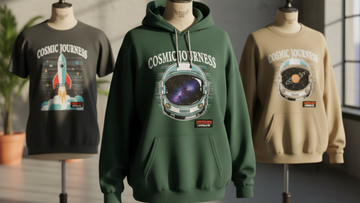
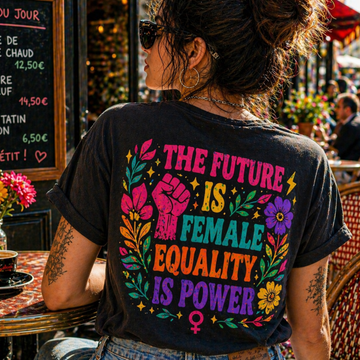
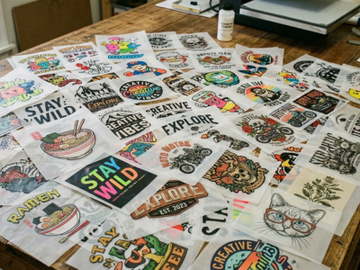
This technology allows you to reproduce logos, illustrations, photographs, gradients, and vibrant colors on many textiles. It works equally well for single pieces or series production.
This textile transfer printing technique allows you to prepare designs in advance and apply them on demand.
Pioneer of DTF in France, Sherpa Transfert supports textile personalization professionals daily. Our mastery of the entire production chain makes Sherpa Transfert today the French reference for professional DTF transfers.
definition
What exactly is DTF printing?
The term DTF means Direct to Film, which can be translated as "direct printing on film".
Unlike printing done directly on the garment, the file is first printed on a transfer film. A heat-melt adhesive is then applied to the ink. The resulting transfer can be stored, shipped and then applied later to the textile.
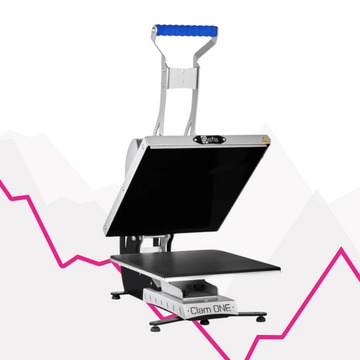
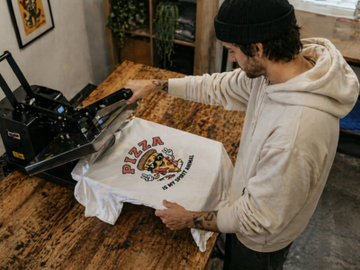
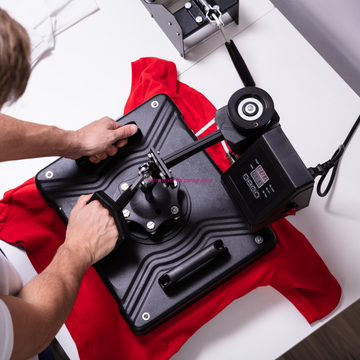
To apply it, simply use a heat press and follow the conditions of temperature, duration and pressure indicated.
The DTF transfer offers great graphic freedom. It allows you to print in particular:
- multicolor logos;
- text and fine details;
- gradients;
- photographs;
- complex illustrations;
- visuals with transparency.

how it works
How does DTF printing work?
DTF transfer manufacturing is based on several technical steps.
Step 1
File preparation
The visual is checked and prepared for printing. Its resolution, dimensions, transparencies, and colors must be adapted to the expected result.
At Sherpa Transfert, our tools and teams allow us to detect many defects before production.

Step 2
Film printing
The design is printed in reverse on a specific film. Colors are applied first, then covered with a white underlay.
This underlay guarantees excellent coverage, even on dark garments.

Step 3
Application of heat-fusible powder
An adhesive powder is applied to the still-wet ink. It is then heated to create the layer that allows the transfer to adhere to the textile.
Step 4
Transfer heat application
The film passes through a drying tunnel. This step stabilizes the inks and evenly melts the heat-fusible powder.
Step 5
Application on textile
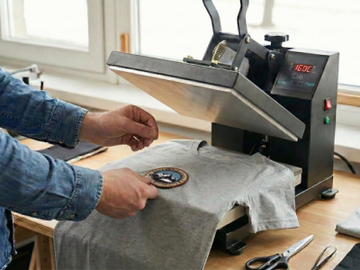
The transfer is positioned on the garment and then heat pressed. Once the film is removed, a second pressing stabilizes the marking and optimizes its durability.
👉 See the application conditions.

composition
What is a DTF transfer made of?

A professional DTF transfer is composed of several complementary layers:
- a transfer film;
- colored inks;
- a white ink undercoat;
- a heat-fusible powder.
The final quality depends on each element, but also on printer settings, color profiles, curing, and production consistency.
This overall mastery is what allows us to obtain a precise, flexible, opaque, and durable textile transfer.
Compatible supports and materials
Which textiles can be customized with DTF?
DTF transfer can be applied to a wide variety of clothing and textile accessories.
It is particularly suitable for:
- cotton;
- polyester;
- blended fabrics;
- t-shirts;
- sweatshirts;
- polo shirts;
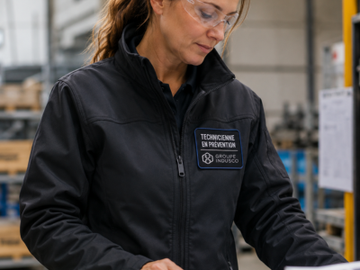
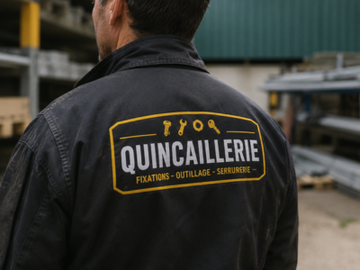
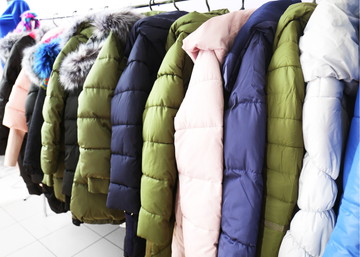
- workwear;
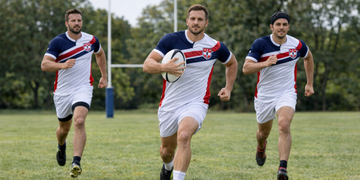
- sportswear;
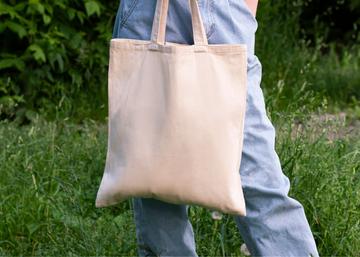
- tote bags;
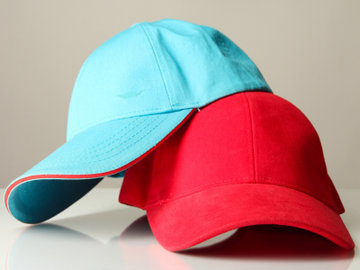
- caps suitable for pressing.
This versatility is one of the main advantages of DTF printing.
Special cases: softshells
However, some technical substrates require a specific solution. For example, softshells can cause their dyes to migrate onto the transfer. For this material, Sherpa Transfert offers DTF Softshell BLOCKMAX, designed to limit these color shifts with low-temperature application.


Tutorial
How do I place a DTF transfer?
Set up the press: Adjust temperature, duration, and pressure according to the textile.
Position the textile: Place the backing flat. Option: pre-pressing to smooth it.
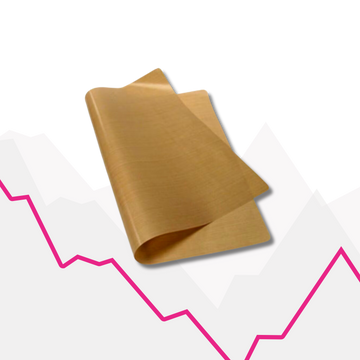
Place the transfer: Position the film. Option: heat tape + Teflon sheet.
First pressing: Press according to the application chart.
Peeling: Remove the film (hot or cold depending on the backing).
Second pressing: Re-press for 5 s with Teflon sheet for maximum durability.
benefits
What are the advantages of DTF printing?
Excellent print quality
DTF reproduces fine details, small text, gradients and complex visuals. It delivers sharp, faithful printing to the original file.
Intense colors
The white underlay provides good coverage on both light and dark textiles. Colors remain visible, contrasted and vibrant.
Great versatility
DTF transfer works on many textiles. It allows you to centralize a large part of your personalization needs with a single marking technique.
Unlimited colors
The price does not depend directly on the number of colors in the design. A simple logo and a multicolor illustration can be produced with the same process.
A solution suited for small and large runs
DTF is available from a single piece. It is also suitable for large productions, orders containing multiple logos, and variable series.
Simple production to organize
Transfers can be ordered in advance, stored and applied as needed. The workshop thus maintains control of its textiles, sizes and production schedule.
the limits
What are the limitations of DTF transfer?
DTF transfer is very versatile, but it does not systematically replace all other personalization techniques.
To achieve a good result, you must in particular:
- use a quality file;
- respect minimum fineness;
- choose a transfer compatible with the textile;
- use a heat press that is properly adjusted;
- respect the temperature, duration and pressure;
- follow the care recommendations.
For certain very large series of simple and identical logos, screen printing transfer may be more interesting from a financial point of view. Sublimation also remains preferable for certain white polyester textiles when a flat print is desired.
Our role is therefore to guide you towards the most suitable technique, and not to propose DTF in all situations.
Washing and care
What is the lifespan of a DTF transfer?
A properly applied professional DTF transfer can generally withstand 50 to 60 washes at 40 °C.
However, this durability depends on several factors:
- the quality of the transfer;
- the garment material;
- the press settings;
- the quality of application;
- washing frequency;
- compliance with care instructions.
To preserve the marking, we recommend washing the garment inside out, at a maximum of 40 °C, and avoiding the dryer as well as direct ironing on the transfer.

Various marking techniques
What is the difference between DTF, flock and screen printing?
DTF or Flock
Heat transfer vinyl typically relies on cutting thermoadhesive vinyl. It is suitable for text, numbers, and simple shapes.
DTF allows you to print multicolor visuals, gradients, and complex illustrations directly, without manual weeding.
DTF or screen printing transfer
Screen print transfer is particularly suited for simple, monochrome logos produced in large quantities.
DTF is more flexible for small runs, detailed designs, multiple colors, and orders containing several different files.
DTF or sublimation
Sublimation penetrates directly into the textile fibers. It creates almost no relief, but generally requires a white or light-colored substrate containing polyester.
DTF can be applied to light or dark garments and to a much wider range of materials.
Many textile personalization techniques exist.
We explain the different methods globally in our article so you can see more clearly.
Specialized manufacturer
Do I need to buy a DTF printer?
Owning a DTF printer allows you to produce your own transfers, but it requires significant investment and genuine technical expertise.
A DTF production line requires in particular:
- a professional printer;
- a powder system;
- a drying tunnel;
- precise white ink management;
- daily maintenance;
- controlled color profiles;
- a stable production environment;
- sufficient capacity to make the equipment profitable.
For most customization workshops, ordering transfers from a specialized manufacturer remains simpler and more cost-effective. The workshop can then focus on sales, textile preparation, and application.
our DTF transfers
What DTF transfers does Sherpa Transfert offer?
We have developed several solutions to meet different levels of requirement.
The PRO DTF transfer
DTF PRO is our versatile solution for most projects. It offers excellent print quality, good coverage and faithful color reproduction.

The PRO MAX DTF transfer
DTF PRO MAX uses eight-color printing and an expanded color gamut. It reproduces more colors outside the traditional CMYK spectrum, including certain vibrant greens, electric blues, and intense oranges.
It also delivers very fine grain and deeper blacks.

The BLOCKMAX Softshell DTF transfer
This solution is designed for softshells with a risk of dye migration. Its low-temperature application and anti-migration barrier help prevent dye bleeding into the transfer.

Order methods
How to order your DTF transfers?
Sherpa Transfert offers several ordering methods adapted for professionals.
You can order your transfers:
- by logo;
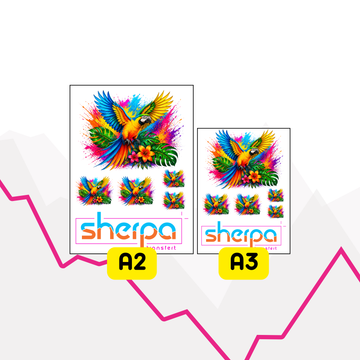
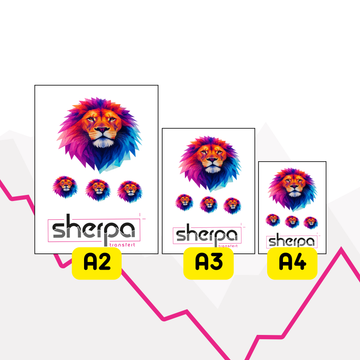
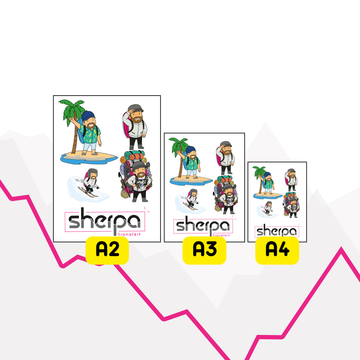
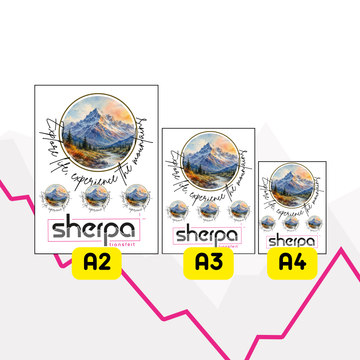
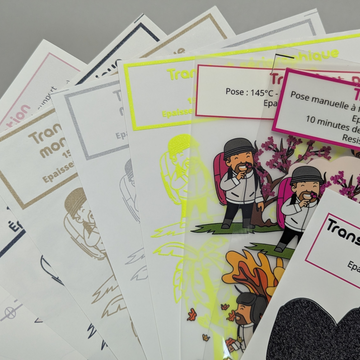
- in A4, A3 or A2 sheet format;
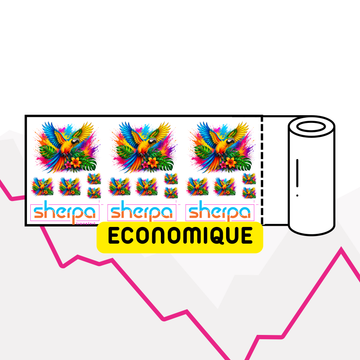
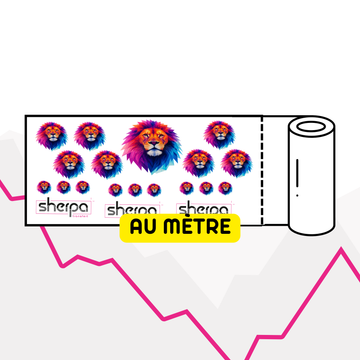
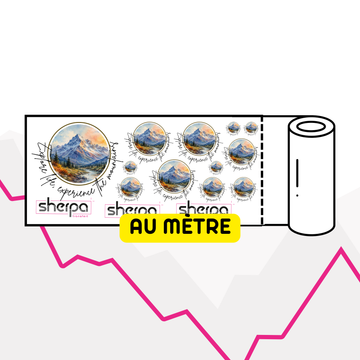
- by the meter;
- in batches with multiple files;
- with different production lead times.
Our online tools also allow you to check your files, remove a background, vectorize a logo or verify if the DTF PRO MAX provides a visible color benefit.
DTF pioneer in France
Why Sherpa Transfert is the DTF reference in France

Sherpa Transfert was the first French website to offer DTF printing online. Since the arrival of this technology in France, we have developed unique technical and industrial expertise.
Today, we put this experience at the service of marking workshops, brand creators, associations, companies and textile personalization professionals.
Choosing Sherpa Transfert means benefiting from:
- the expertise of the French DTF pioneer ;
- one of the largest DTF production facilities in France ;
- more than 50 print heads ;
- manufacturing carried out in our workshop in Moirans, near Grenoble ;
- color profiles developed and controlled in-house ;
- a demanding and consistent print quality ;
- short production times, from D0 to D+5 ;
- guaranteed deadlines or refunded ;
- a highly responsive technical team ;
- transfers manufactured in France ;
- OEKO-TEX STANDARD 100 certifications,
Our expertise is not limited to DTF printing. Sherpa Transfert has become the French specialist in textile and object personalization solutions: screen-printed transfers, sublimation, custom patches, DTF UV stickers, blank textiles and professional tools.
This comprehensive mastery allows us to advise you objectively and guide you towards the best technique for each project.
DTF Printing FAQ
What does DTF mean?
DTF stands for "Direct to Film". The design is printed directly onto a film before being transferred onto the textile using a heat press.
What materials can a DTF transfer be applied to?
DTF can be applied to cotton, polyester, and many blended textiles. However, some technical substrates require a specific transfer.
Does DTF work on dark clothing?
Yes. The white ink underlay provides excellent coverage on black, colored, or dark textiles.
Does DTF transfer resist washing?
Yes. A professional DTF transfer correctly applied can generally withstand 50 to 60 washes at 40°C, depending on the textile, application and care.
Can you apply DTF with an iron?
The use of a heat press is strongly recommended. It guarantees consistent temperature, pressure, and duration across the entire transfer surface.
What temperature should I use to apply a DTF transfer?
Sherpa DTF transfers are generally applied at 145°C for 15 seconds, with a pressure of 3.5 to 5 bars, then a second press for 5 seconds. Conditions may vary depending on the transfer and textile.
Can you print a photograph in DTF?
Yes. DTF printing allows you to reproduce photographs, gradients and detailed illustrations, provided you use a high-quality file.
What minimum fineness must be respected?
We generally recommend a minimum fineness of 0.5 mm. Elements that are too thin risk not receiving the heat-melt powder properly or lacking resistance after application.
What is the difference between DTF PRO and DTF PRO MAX?
DTF PRO uses an optimized CMYK color spectrum. DTF PRO MAX uses eight colors and a wider gamut to reproduce certain shades outside traditional CMYK.
Where to order professional DTF transfers in France?
Sherpa Transfert manufactures professional DTF transfers in its workshop in Moirans, near Grenoble. A pioneer in online DTF printing in France, we offer custom orders, sheets, by the meter, or in batches, with guaranteed turnaround times from same-day to 5 days.


