











































DTG printing: how it works and differences with DTF
DTG printing (Direct to Garment), its functions and limitations: the best alternatives for your textile marking.
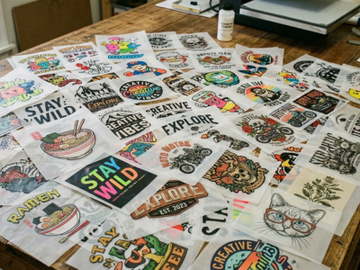
DTG printing (Direct to Garment) is a technique for direct printing on textiles that involves printing a design directly onto a garment, most often cotton, using a specialized textile printer.
This method is regularly used to customize t-shirts, sweatshirts, polos or certain small-batch pieces. It allows for good detail levels, especially on complex or multi-color designs.
But then, what's the difference between DTG and DTF? And most importantly, in which cases is DTF often better suited to professional needs?
At Sherpa Transfert, we explain simply how DTG works, its advantages, its limitations, and the most relevant alternatives depending on your business.
definition
What is DTG printing?

DTG stands for Direct to Garment, literally "direct printing on garment".
Unlike a transfer technique, here the design is printed directly onto the textile, without going through an intermediate film. The printer deposits ink directly onto the garment surface, much like a paper printer… but adapted for textiles.
DTG printing generally uses water-based inks, which allows for precise results, especially on detailed designs or those with many gradients.
This technique is mainly used for:
- small runs,
- print on demand,
- detail-rich designs,
- textiles that are predominantly cotton.
FONCTIONNEMENT
How does DTG printing work?
The DTG printing process generally follows several steps:
1. Design preparation
The file is prepared using graphic software, then sent to the printer via RIP software that converts the design into print data.
2. Textile pretreatment
The garment often receives a pretreatment designed to improve ink adhesion and optimize rendering, especially on dark textiles.
3. Garment application
The textile is positioned flat on a platen inside the printer to ensure stable and precise printing.
4. Direct printing
The textile printer deposits inks directly onto the garment. On dark fabrics, a white underlay is often applied before the colors.
5. Fixing
Once printed, the textile must be heated (press or drying tunnel) to set the ink and improve its durability.
6. Quality control
As with any professional textile printing, final quality control verifies sharpness, colors and marking compliance.
AVANTAGES
What are the advantages of DTG printing?
DTG printing has several advantages depending on the projects:
Good level of detail
DTG allows you to reproduce complex visuals with fine lines, gradients and many colors.
A solution tailored for small runs
DTG is interesting for single orders or small quantities, as it does not require a screen like screen printing does.
Direct printing
The design is integrated directly into the textile, which may suit certain desired finishes on cotton.
A good option for certain e-commerce projects
DTG is sometimes used in print on demand logic, particularly on cotton t-shirts.
LIMITES
What are the limitations of DTG?
Although DTG may be relevant in some cases, it also has several limitations that are important to know about.
Strong dependence on textile type
DTG generally works best on cotton-rich textiles, even 100% cotton.
On synthetic, blended, or more technical fabrics, results can be more variable.
A pretreatment requirement
Pretreatment is often essential, which adds an extra production step.
More limited versatility than DTF
DTG is direct printing. In contrast, DTF transfer often offers greater flexibility to adapt to different textile substrates, especially when dealing with a variety of materials.
Durability that depends heavily on the substrate and process
As with any textile technique, durability depends on the substrate, machine settings, pretreatment and care conditions.
Depending on usage, some professionals prefer DTF or screen printing transfer for greater consistency.
differences
DTG vs DTF: what are the differences?
DTG and DTF are two different techniques, even if they can sometimes meet similar needs.
👉 DTG: direct printing on garment.
In DTG, the design is printed directly onto the textile.
👉 DTF: printing on film then transfer.
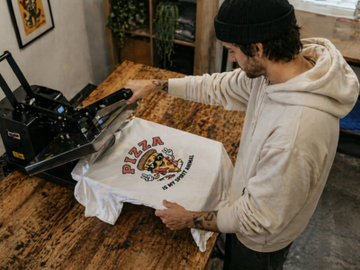
In DTF (Direct to Film), the visual is first printed onto a film, then transferred onto the textile using adhesive powder and a heat press.


+ versatile
Why is DTF often better suited for professionals?
At Sherpa Transfert, we support many professionals looking for a solution that is versatile, reliable, and simple to integrate into their production.
In many cases, DTF transfer offers concrete advantages:
Better textile versatility
DTF adapts to a wide variety of substrates:
- cotton
- polyester
- cotton/polyester blends
- dark or light textiles
- workwear
- tote bags
- sweatshirts
- jerseys
- textile accessories
Great graphic freedom
DTF allows you to print:
- multicolor logos
- fine lettering
- gradients
- detailed visuals
- small runs and reorders
A practical solution for marking workshops
DTF transfer is particularly useful for:
- on-demand production,
- managing small to medium runs,
- storing transfer sheets,
- pressing at the right time based on customer needs,
- gaining operational flexibility.
More flexible production logic
For many professionals, DTF allows them to separate printing and application, which can simplify production organization.
compatible supports
Which surfaces can DTG printing be used on?
DTG printing is mainly used on textiles suitable for direct printing, particularly cotton-rich substrates.
The most common substrates are:
- cotton t-shirts
- cotton or cotton-blend sweatshirts
- polos
- children's clothing
- certain ready-to-wear items
- certain cotton tote bags or textile accessories
In general, DTG produces better results on substrates that are:
- flat,
- low-stretch,
- predominantly cotton,
- compatible with the inks used.
alternatives
What alternatives to DTG printing for professionals?
If you're looking for a DTG alternative, it all depends on your volumes, your textiles, the expected finish and your production organization.
At Sherpa Transfert, the most relevant alternatives are as follows:
1. DTF transfer: the most versatile alternative
The DTF transfer is today one of the most interesting alternatives to DTG for textile marking professionals.
👉 At Sherpa Transfert, DTF printing is the most logical solution to consider if you're looking for a modern, flexible and professional alternative to DTG.

Why choose DTF over DTG?
Because it generally allows you to:
- work on more textile materials
- mark light and dark textiles
- handle complex and multicolor logos
- produce in small, medium or micro-runs
- order ready-to-press sheets
- gain flexibility in your workshop
What uses?
DTF is particularly suitable for:
- t-shirts
- sweatshirts
- tote bags
- workwear
- jerseys
- textile accessories
- capsule collections
- reorders
- event marking
2. Screen printing transfer: ideal for certain production needs
Screen printing transfer is another highly relevant alternative, especially when projects are more standardized or require specific production logic.
👉 At Sherpa Transfert, screen printing transfer perfectly complements DTF according to production constraints and the type of marking you're looking for.

Why choose screen printing transfer?
This technique can be interesting for:
- certain simpler or more standardized designs,
- consistency needs for series production,
- projects where the desired finish follows a more industrial approach,
- recurring markings.
When to prefer it over DTG?
Screen printing transfer can be interesting if:
- you have larger structured volumes,
- your design is finalized,
- you're looking for a proven solution for certain textile applications.
3. Sublimation: relevant on light polyester
If you are working on compatible substrates, sublimation can also be an alternative to DTG.
⚠️ Sublimation is not a universal solution: it performs very well on suitable substrates, but is much more limited than DTF in terms of overall compatibility.
Sublimation is suitable if:
- the backing is polyester
- the textile is light or white
- you are looking for marking integrated into the fiber
- you are working on certain sportswear, accessories or technical textiles

How to Choose?
DTF, DTG or screen printing: which technique to choose?
There is no single "best" technique in absolute terms.
The right choice depends on several criteria:
- the fabric material,
- the type of design,
- the level of detail,
- volumes,
- production organization,
- reorder frequency,
- desired finish.
In summary:
- DTG: interesting for certain cotton textiles and direct-to-order printing
- DTF: highly versatile, flexible and particularly suited to the current needs of many professionals
- Screen printing transfer: relevant depending on volumes, design standardization and certain production logics
- Sublimation: excellent option on compatible light polyester
conclusion
Conclusion: DTF, a often more flexible alternative to DTG
DTG printing remains an interesting technique for certain projects, particularly on cotton-rich textiles and in direct printing logic.
But for many textile marking professionals, DTF transfer is today often a more versatile, flexible and easy to integrate into a real production organization solution.
At Sherpa Transfert, we support workshops, brands and professionals looking for:
- a high-performance solution for complex visuals,
- broader compatibility with textiles,
- flexible production,
- ready-to-press sheets,
- a responsive and specialized partner.
👉 If you're looking for an alternative to DTG for your next productions, DTF transfer and screen printing transfer are among the most relevant solutions to compare.
FAQ – DTG Printing
What is DTG printing?
DTG printing, or Direct To Garment, is a direct textile printing technique.
The design is printed directly onto the garment with a DTG printer.
How does DTG printing work?
The textile is placed in a DTG printer.
Inks are sprayed directly onto the fabric fibers.
On dark textiles, a white base is often necessary.
Which textiles can DTG printing be applied to?
DTG printing works mainly on cotton textiles.
It is suitable for t-shirts, sweatshirts, hoodies and tote bags with a high proportion of cotton.
What is the difference between DTG printing and DTF printing?
DTG prints directly onto the garment.
DTF prints onto a film, then the DTF transfer is heat-pressed onto the fabric.
DTF printing is more versatile for textile marking professionals.
Is DTG printing suitable for complex logos?
Yes, DTG printing allows you to print logos, photos, gradients and multicolor designs.
The result depends on the textile, the file and the print quality.
Does DTG printing hold up well to washing?
Yes, a well-executed DTG print can offer good wash durability.
Wash the garment inside out, at low temperature, and avoid aggressive cycles.
What are the advantages of DTG printing?
DTG printing delivers a soft, detailed and colorful finish on cotton.
It is interesting for small runs, complex visuals and on-demand printing.
What are the limitations of DTG printing?
DTG is less suitable for synthetic, technical or highly stretchy textiles.
For greater textile versatility, DTF transfer is often more effective.
DTG printing or DTF transfer: which to choose?
DTG is suitable for printing directly on cotton.
DTF transfer is better suited if you want to personalize different textiles with a single technique.
Can DTG printing be done on dark textiles?
Yes, DTG printing is possible on dark textiles.
A white underlay is generally printed to make the colors stand out.
Discover our products
Textile transfers
Our textile transfers make it easy to customize t-shirts, sweatshirts, tote bags, workwear and textile accessories.
Depending on the desired finish, you can choose from several techniques: DTF transfer, screen printing transfer, textile sublimation.
Each textile transfer is designed to meet a specific need: detailed logos, large runs, small quantities, vibrant colors, flexible finish, wash resistance or specific finishing.

DTF Transfer Printing

DTF Transfer Printing

DTF Transfer Printing

DTF Transfer Printing

DTF Transfer Printing
Our tools and services
Our tools and services have been designed to save you time and simplify your daily work. Ordering, file preparation, customization, or support: everything is designed to make your projects faster, simpler, and more efficient.

File verification - digital proof

Logo vectorization

AI Automatic Vectorization

AI Background Removal


