

























































What is screen printing transfer? The complete guide
Screen printing transfer guide: technique, advantages, application, professional uses (agencies, workshops, events) and Sherpa Transfert services.
- ✔ From 10 pieces
- ✔ Monochrome
- ✔ Ideal for large quantities

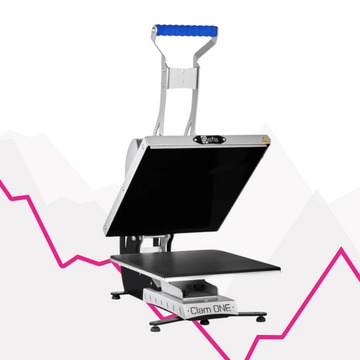
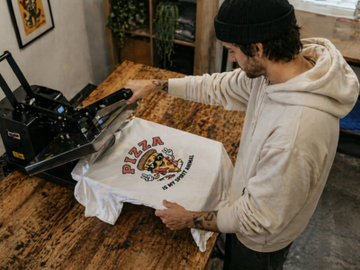
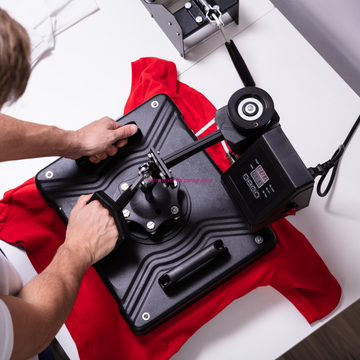
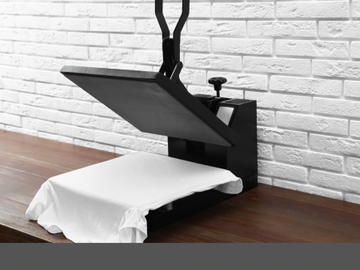
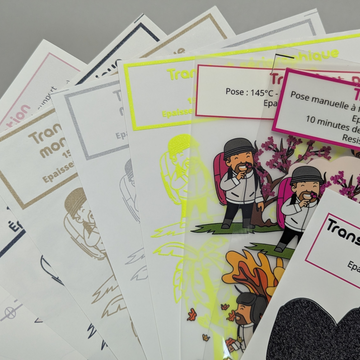
Screen print transfer is a textile marking technique that involves printing a design in screen printing ink on transfer paper, then fixing it to the garment using a heat press.
It is particularly suitable for monochrome logos, solid color areas, and productions with multiple identical markings.
Sherpa Transfert offers screen print transfers in France for textile personalization professionals: marking workshops, brands, associations, sports clubs, businesses, and resellers.
in a nutshell
Screen print transfer in brief
- monochrome design;
- excellent opacity;
- sharp edges;
- heat press application;
- advantageous pricing in quantity;
- storage and application on demand;
- French manufacturing.

how it works
How does screen printing transfer work?
Screen printing transfer is an indirect printing technique.
Unlike direct screen printing, the ink is not applied directly to the garment. The design is first printed on specific transfer paper.
A heat-activated adhesive is then applied to the back of the print. During pressing, heat and pressure activate this adhesive and permanently fix the design to the textile.
After cooling, the paper is removed. Only the design remains on the garment.
This method allows you to order transfers in advance, store them, and apply them gradually as needed.
composition
What is a screen print transfer made of?
A screen-printed transfer consists of three main elements.
Transfer paper
The paper serves as a temporary support during manufacturing, transport, storage, and application.
It is removed after pressing.
Screen-printing ink
The ink constitutes the visible part of the marking.
It allows for uniform solids, precise outlines, and excellent opacity, even on dark garments.
Hot-melt adhesive
The adhesive is deposited on the back of the ink.
It melts under heat and allows the transfer to adhere to the textile fibers.

benefits
What are the advantages of screen-printed transfers?
Sharp and professional finish
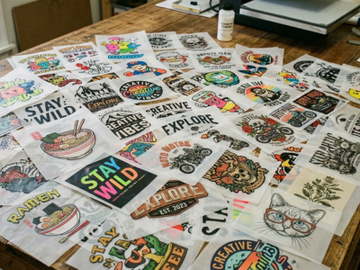
Screen print transfer is perfectly suited for logos, text, numbers, pictograms, and simple graphic shapes.
Outlines are sharp and fills are even.
Excellent opacity
Screen printing inks offer excellent coverage.
The marking remains intense on light, colored or dark textiles.
Advantageous price in quantity
Manufacturing a screen-printed transfer includes preparation costs.
As the quantity of identical transfers increases, the unit cost becomes more attractive.
This solution becomes particularly advantageous for repetitive production and series of identical transfers.
On-demand application
Transfers can be stored and then applied gradually.
This organization makes restocking, textile collections, and custom orders easier.
Multiple colors and finishes
Screen print transfer is not limited to black and white.
It can also be offered in different Pantone colors, with a gold or silver metallic effect, or in highly visible flash tints.
Great consistency across the entire series
Each transfer reproduces the same design, with consistent color, opacity, and finish. This consistency is essential for workwear, brand collections, and large-quantity productions.
USE CASES
In which cases should you choose screen print transfer?

Screen printing transfer is recommended for simple visuals with a single color.
It is particularly suitable for:
- company logos;
- texts and lettering;
- numbers;
- pictograms;
- professional clothing;
- sports outfits;
- association clothing;
- event textiles;
- tote bags;
- compatible textile accessories.
It is particularly interesting when the same visual needs to be applied to multiple products.
For a photograph, a gradient or a multicolor logo, DTF transfer will generally be more suitable.
Four-color screen printing transfer also exists.It however requires a white or black outline depending on the color of your textile.
COMPARAISON
What is the difference between screen print transfer and direct screen printing?
Direct screen printing involves printing ink directly onto the garment.
With screen print transfers, the image is first printed onto paper, then applied to the fabric using a heat press.
Screen print transfers offer greater flexibility for customization workshops:
- no need to send garments to the printer;
- transfers easy to store;
- application according to orders;
- same design usable on multiple garments;
- simplified reorder management.
Direct screen printing remains particularly suited for large production runs completed in one go.
Screen print transfers allow for more flexible organization and progressive application.

compatible textiles
Which textiles can screen-printed transfers be applied to?
Screen-printed transfer can be applied to many common textiles:
- cotton;
- solution-dyed polyester;
- cotton and polyester blends;
- t-shirts;
- sweatshirts;
- polos;
- workwear;
- sportswear;
- tote bags;
- compatible textile luggage.
Compatibility should always be verified before large-scale production.
Certain treatments, coatings, or pigments may affect adhesion or marking appearance. A preliminary test is recommended on sensitive or unknown textiles.
For softshells and garments presenting a risk of pigment migration, we recommend a specific solution such as DTF Softshell BLOCKMAX transfer.
File preparation
How to prepare a file for screen printing transfer?
Screen-printed transfer is intended for monochrome designs.
To achieve a clean result, the file should ideally be:
- in high definition;
- with a transparent background;
- composed of a single color;
- without gradient;
- without transparency;
- without drop shadow;
- with clean outlines;
- preferably in vector format.
PDF, AI, EPS or SVG formats are recommended.
Text must be vectorized to avoid any font issues when opening the file.
If your logo is only available in low definition, our designers can redraw it in vector.
We have created several tools to make it easier for you to prepare your files.

tutorial
How to apply a screen print transfer?
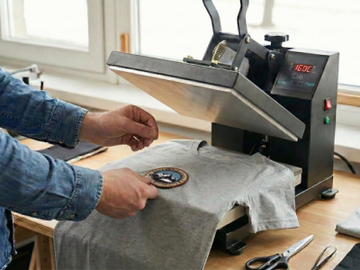
1. Prepare the textile
Place the garment flat on the platen.
2. Position the transfer
Place the transfer in the desired location.
The paper must remain visible on top.
3. Set the press
Settings should be adjusted according to the textile and press used.
4. Press the transfer
Close the press for the entire recommended duration.
Pressure must be even across the entire design.
5. Let cool
Wait for the design to cool before gradually removing the paper.
our products
Sherpa Transfert screen printing transfers
Color screen-printed transfer
Color screen printing transfer allows you to choose from a selection of Pantone shades.
It is suitable for businesses and brands that want to maintain a color close to their visual identity.


Black or white screen transfer
Black or white screen-printed transfer is ideal for monochrome logos and text.
It offers excellent opacity and particularly attractive pricing at volume.
It is especially suitable for workwear, associations, sports clubs, and event operations.
Metallic screen print transfer
Metallic screen-printed transfer is available in gold or silver finish.
It brings a shiny and distinctive look to personalized clothing.


Flash color screen transfer
Flash colors offer a very vibrant and immediately visible finish.
They are particularly suitable for sportswear, events, and dynamic graphic designs.
These shades are intense, but they are not fluorescent under UV light.
a trusted partner
Why choose Sherpa Transfert?
Sherpa Transfert is a French manufacturer specializing in textile and object personalization solutions for professionals.
Our screen-printed transfers are manufactured in France for marking workshops, brands, associations, agencies and resellers.
Our expertise in textile transfer, DTF printing and various marking techniques allows us to guide you towards the solution best suited to your file, your medium and your quantities.
You benefit from:
- French manufacturing;
- professional print quality;
- bold and opaque colors;
- multiple finishes available;
- clearly announced lead times;
- a responsive team;
- technical support before and after your order.

Frequently asked questions about screen print transfer
Is screen-printed transfer a heat transfer?
Yes. Screen printing transfer is a heat transfer, as it is fixed to the textile through heat and pressure.
Is screen-printed transfer suitable for small quantities?
It can be ordered in small quantities, but it becomes especially interesting when multiple identical copies are needed.
Minimum quantity: 10 sheets.
Can you print multiple colors in the same transfer?
Our screen print transfer offer is intended for monochrome designs.
For a multicolor logo, photograph or gradient, choose a DTF transfer.
Can we reproduce a Pantone color?
We offer a selection of 24 Pantone colors.
We can also create custom shades.
Is screen printing transfer suitable for dark textiles?
Yes. Its excellent opacity allows for visible marking on dark or colored textiles.
Should the paper be removed hot or cold?
The paper must be removed when cold.
Wait for the transfer to cool before peeling.
Does screen print transfer resist washing?
Yes, provided you follow the application parameters and care recommendations.
Durability also depends on the textile and the quality of the pressing.
Can a screen printing transfer be applied with an iron?
No, we recommend a professional heat press.
An iron does not allow precise control of temperature, time and pressure.
Can screen printing transfers be stored?
The Essentials
Key Points
Screen-printed transfer is a reliable, clean, and cost-effective textile marking solution for monochrome logos.
It offers excellent opacity, good durability, and an attractive price when multiple identical transfers are ordered.
It is particularly suited for businesses, clubs, associations, brands, and customization workshops that want to order their transfers, stock them, and apply them on demand.


