
















































Heat press: guide
Professional heat presses for applying your textile transfers and objects. Simple, reliable and suited to all production volumes.
- ✔ Precision
- ✔ Performance
- ✔ Professional quality

A heat press transfers an image from a transfer film onto a substrate using pressure and heat. At Sherpa Transfert, the heat press is essential for our customers to use the prints we provide them.
The heat press is a versatile and effective tool that has revolutionized the world of custom apparel and textile printing. Its ease of use, combined with its precision and cost-effectiveness, makes it an essential choice for many. But how does a heat press work? What criteria must be met? What budget should you plan for to get one?
essential
Heat press: an essential tool in the printing world
The heat press (or transfer press) emerged in the 20th century. Initially, this technology was rudimentary and often involved manual methods of applying heat and pressure. In 1930, the first patent for a heat press was filed, but it wasn't until the late 1960s and early 1970s that the technology became more refined and commercially viable.
The advent of digital technology in the late 20th century revolutionized the heat press industry.
Indeed, today's modern machines are equipped with digital timers, temperature controls and pressure settings, making the process more precise and efficient. The heat press has evolved from a simple manual machine to sophisticated equipment capable of handling a variety of materials and complex designs in the printing industry.
definition
What is a heat press?
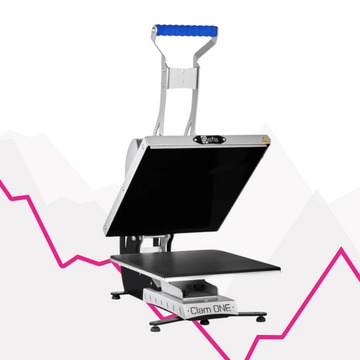
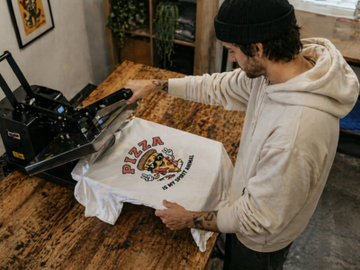
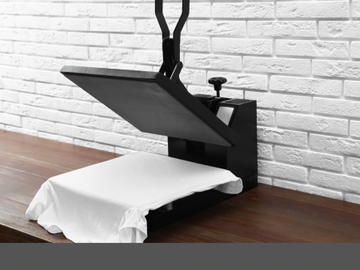
A heat press is a device used to apply pressure and heat to a material, generally to transfer a design or image onto that material.
This type of press is very common in the textile personalization industry, including for techniques such as DTF (Direct To Film).

use
How to use a heat press?
Using a heat press is relatively simple, but it requires careful attention to detail. Sherpa Transfert explains precisely how to use it.
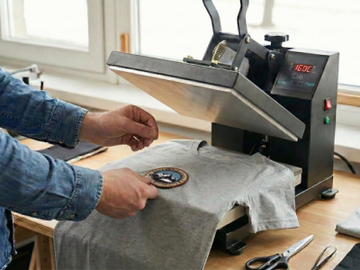
It is necessary to set the heat press to the required temperature and pressure. For example, for cotton, set the temperature to 145 degrees. The transfer time should be 15 seconds, and the pressure between 3.5 and 5 bars (settings required for our DTF transfer).
Warning: it is mandatory that the machine be on a stable surface.
Read: What are the conditions for applying a DTF transfer?
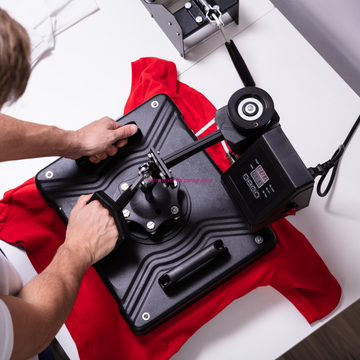
Next, you can proceed to placing the garment or textile. Place it on the lower platen of the heat press. Make sure the textile is smooth and wrinkle-free: an initial empty pressing can be performed.
Position your heat transfer or vinyl design on the garment, making sure it is properly aligned and lower the upper platen onto the garment and start the timer. The heat and pressure will transfer the design onto the textile.
Once the timer goes off, lift the upper platen and carefully peel off the transfer paper. A second pressing may be necessary depending on the type of transfer used, in order to allow the transfer to penetrate further into the fabric. This allows for better durability and resistance to washing.
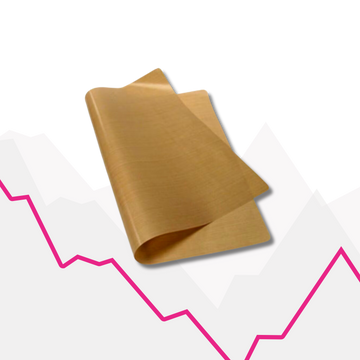
We recommend using a Teflon sheet (heat resistant) or parchment paper to protect the textile as well as the press.Finally, let the garment cool before handling it further.
Keep in mind that temperature, duration and pressure settings may vary depending on the type of fabric and type of transfer you are using. Always refer to the guidelines provided with your heat transfer or vinyl!
How do I place a DTF transfer?
Feature
What are the features of a heat press?
The heat press has several unique features. Let's discover them together!
Versatility
One of the most important advantages of a heat press is its versatility. Indeed, you can use it to transfer designs onto a wide range of materials, including fabric, ceramics and even wood.
Speed
Compared to traditional methods like screen printing, heat press is much faster and ideal for small to medium production runs.
Ease of use
Additionally, they are equipped with digital controls that allow precise adjustments of temperature, duration, and pressure. This ensures consistent, high-quality results.
Result Quality
If you want to print detailed images, a heat press is ideal! It allows high levels of customization, letting you easily create unique designs.
Security
Finally, the heat press is equipped with safety features such as automatic shutdown and alarms to prevent overheating or other potential issues.
Different types of presses
Depending on the type of project and specific needs, there are several types of heat presses that differ in their operation, use and cost.
| How it works | Benefits | Drawbacks | Ideal for | |
|---|---|---|---|---|
|
Electromagnetic heat press
|
|
|
|
|
|
Pneumatic press
|
|
|
|
|
|
Manual press
|
|
|
|
|
The duel
Single platen press VS dual platen press: what's the difference?
Two types of presses exist: single-platen presses and dual-platen presses. A single-platen press is often better suited for beginners or small operations, while a dual-platen press is more efficient for large-scale production.
Single Platen Press
This type of press is generally simpler to use and configure. It is ideal for beginners or small-scale operations. Single-platen presses typically take up less space, which can be an advantage in limited areas.
Additionally, they are often cheaper than dual-platen presses, making them more accessible for tight budgets.
In terms of production time, single-platen presses only allow you to work on one item at a time. This can slow down the production process if you have large quantities to print.
There are also manual presses, which are simpler to use. This is a viable option for those starting out in textile printing or with more modest production needs. They offer an excellent introduction to the basics of printing and are a good choice for small-scale projects.


Two-platen press
The main advantage of a two-platen press is efficiency. While one platen is being pressed, you can prepare the next item on the second platen. This allows for a continuous, faster, and more cost-effective workflow.
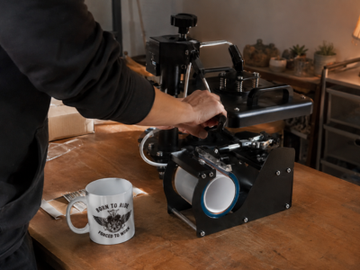
Note: not all types of presses come with two platens. For example, cap presses, mug presses, or roller presses only exist with a single platen.
These presses are often used for higher production volumes. They are ideal for businesses that need to produce large quantities in a short time. Generally more expensive, these presses are considered an investment for businesses with high production volumes.
However, two-platen presses take up more space due to their two-platen design. Make sure you have enough space in your workshop.
Some models allow you to adjust the temperature and pressure of each platen independently, offering more flexibility to work with different materials or designs simultaneously.
Dimensions
Which heat press size to choose?
The small ones
15 x 15 cm: Ideal for small projects like labels or pocket logos. 20 x 30 cm: Used for items like caps or sleeves. This type of press has a "curved" platen allowing the print to adhere optimally!
The averages
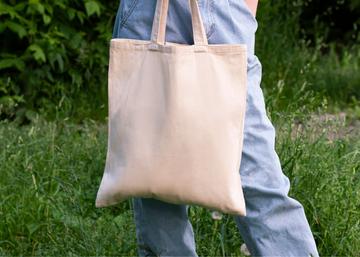
38 x 38 cm: A standard size for medium-sized projects, such as t-shirts or canvas bags. 40 x 50 cm: Offers a bit more space for larger designs or for working with bulkier garments like hoodies.
The large ones
50 x 70 cm: Used for larger projects such as posters or banners.
80 x 100 cm: Ideal for industrial applications or printing on large textiles such as sheets or curtains.
What is the price of a heat press?
| Indicative price range | What's It For? | Key Points | |
|---|---|---|---|
|
Flat press
|
|
|
|
|
Cap / mug press
|
|
|
|
|
Roller press
|
|
|
|
The factors that affect the price of a heat press
| Impact on price | What you need to know | |
|---|---|---|
|
Features
|
|
|
|
Platen Size
|
|
|
|
Manufacturing quality
|
|
|
|
Opening type / ease of use
|
|
|
|
Accessories and consumables
|
|
|
Heat press accessories
To maximize their efficiency and versatility, a range of accessories is often necessary. These accessories not only allow you to adapt the machine to different types and sizes of materials, but also ensure optimal print quality and safer, more comfortable use. From interchangeable platens to Teflon sheets, infrared thermometers, and heat-resistant gloves, each accessory has a specific function that can significantly enhance your printing experience.
| Indicative price range | Main utility | Key Points | |
|---|---|---|---|
|
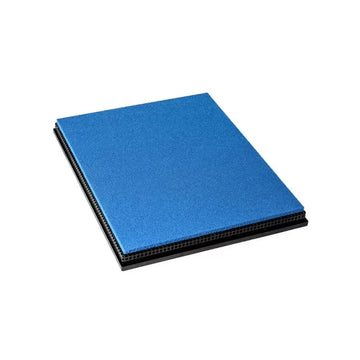
Interchangeable platens
|
|
|
|
|
Teflon pads
|
|
|
|
|
Teflon sheets
|
|
|
|
|
Cleaning Kits
|
|
|
|
|
Heat-resistant gloves
|
|
|
|
|
Infrared thermometers
|
|
|
|
|
External Timers
|
|
|
|
|
Heat-protective / high-temperature tape
|
|
|
|
|
Positioning laser
|
|
|
|
|
Positioning ruler
|
|
|
|
Sherpa transfer
Being well-equipped is important. Being well-supported is even better!
A good heat press clearly makes the difference in a workshop. It allows you to gain comfort, consistency and productivity. But to achieve a truly clean result, it must above all be combined with the right transfers and the right application settings.
That's why, at Sherpa Transfert, we support professionals equipped with a heat press with ready-to-apply, reliable solutions adapted to their production constraints.
DTF Transfer, screen printing transfer, sublimation transfer or custom patches : we help you choose the solution best suited to your textiles, your press and your production method.
👉 Do you have a heat press and are you looking for transfers that are simple to apply, reliable and designed for professionals?
Tell us about your project, our team can guide you towards the most suitable solution: Contact Sherpa Transfert.
Discover our products
Accessories for heat presses
Accessories designed to optimize the use of your heat press. Interchangeable platens, covers, compressors, tables, and complementary equipment to gain comfort, precision, and productivity.

Rotex v4 double platen trolley

Sefa Compressor - COMP-111

Sefa Compressor - COMP-240

Sefa Compressor - COMP-37

Sefa Compressor - COMP-74
Application Accessories
Find all the essential accessories to make applying your textile and object transfers easier. Practical tools, simple to use, and selected to save you time every day.

Teflon sheet 40 x 60 cm

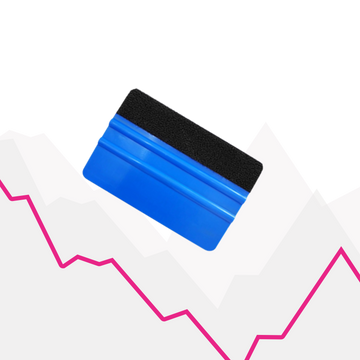
Felt squeegee - UV DTF applicator

Felt squeegee - UV DTF applicator
Our textile transfers and items
- DTF transfers
- Textile/object sublimation transfers
- DTF UV stickers
- Custom patches

DTF Transfer Printing

DTF Transfer Printing

DTF Transfer Printing

GRAV' CUIR patch - silimicuir engraved patch - SherPATCH


