
















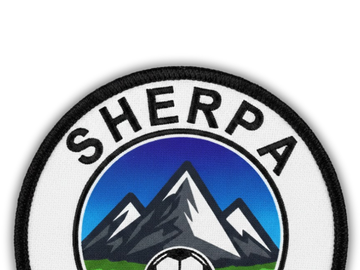

































Four-color transfer: choose DTF
Print your designs in four-color process on textile with DTF technology: quality, durability, ease of application. Sherpa Transfert guides you.

explanation
Four-color transfer: definition, techniques and uses in textile marking
The term four-color transfer, sometimes called quad transfer or CMYK transfer, refers to a printing technique based on the four basic inks of the CMYK system: Cyan, Magenta, Yellow and Black.
It is a method historically used to print visuals rich in colors, with gradients and fine details. More simply, it is a multicolor transfer.
But be careful: four-color transfer does not refer to a single manufacturing technique. Rather, it is a family of transfers capable of reproducing a visual in color.
The DTF transfer, the four-color screen printing transfer and the sublimation transfer are for example three types of quad transfer. Each uses a different manufacturing method, with its own advantages, compatible substrates and final finish.
The common point remains the same: to allow multicolor textile transfer printing, precise and adapted to colored visuals.
Today, this term often refers to a graphic need, such as printing a logo in color, a photo or a visual with gradients, rather than to a particular type of transfer.
definition
What Is a Four-Color Process Transfer?

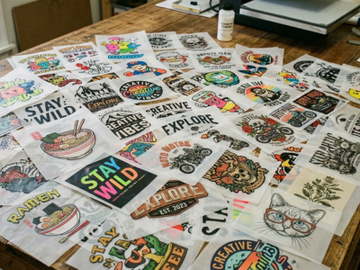
A four-color transfer is a textile transfer printed in multiple colors using the CMYK system.
This process allows you to reproduce:
- multicolor logos;
- visuals with gradients;
- detailed illustrations;
- photographs;
- shadow or light effects;
- complex graphics.
Unlike a single-color transfer, which uses only one color, four-color transfer delivers much richer results. It is therefore particularly suited to visuals that cannot be simplified into one or two shades.
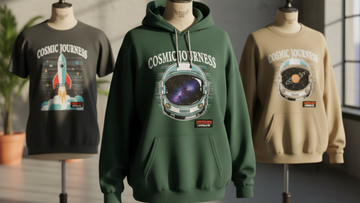
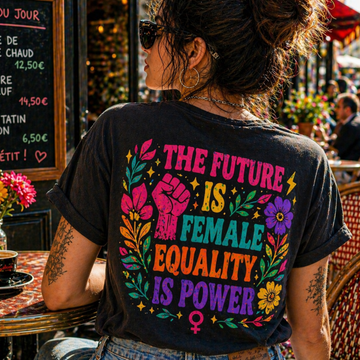
In the textile marking industry, four-color transfer is widely used for personalized t-shirts, sweatshirts, tote bags, workwear, event apparel, and brand collections.
features
One printing method: multiple types of transfers
This is the most important point to understand.
Four-color transfer is not a single technique. It can be manufactured in several ways.
You can obtain a four-color transfer using different marking methods, including:
- DTF transfer;
- four-color screen printing transfer;
- sublimation transfer.
These three solutions allow you to print in color, but they do not work in the same way. The finish, durability, textile compatibility, and recommended uses may therefore vary.
A customer may request a "four-color transfer" because they want a color logo. But to choose the right solution, you must then identify the most suitable manufacturing method.
The reference
DTF transfer: the most versatile four-color solution
DTF transfer is today one of the most used solutions for four-color textile printing.
The principle is simple: the visual is printed on a film, with color inks and a white layer. A heat-adhesive powder is then applied, and the transfer is heat-pressed onto the textile.
DTF transfer allows you to reproduce complex logos, colors, gradients and fine details. It works on many textiles, light or dark, and does not require outline cutting around the visual.
It is a very effective solution for textile customization professionals, as it allows easy production of small batches, restocks, different logos or custom orders.
DTF transfer is particularly suitable for:
- personalized t-shirts;
- sweatshirts;
- tote bags;
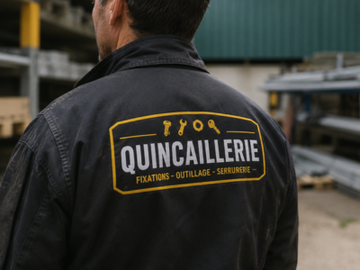
- work clothing;
- event clothing;
- brand collections;
- multicolor logos.
It is often the simplest solution when looking for a versatile, precise and quick-to-apply four-color textile transfer.

History
Four-color screen printing transfer: a technical solution for specific needs

The four-color screen transfer is based on a different method. It uses the principle of screen printing, adapted to printing visuals in multiple colors.
This solution can be interesting for certain specific projects, particularly when looking for a particular finish, a different feel or production adapted to specific constraints.
The four-color screen transfer can allow you to obtain colored marking, with good intensity and very good durability, depending on the formulation used and the textile support.
On the other hand, this method generally requires more preparation than a DTF transfer. It is therefore less flexible for small quantities, highly variable visuals or orders with many different files.
It can be relevant for:
- larger series;
- specific finish requirements;
- certain technical textiles;
- projects requiring a more traditional approach to textile transfer.
The four-color screen transfer therefore remains a professional solution, but its relevance depends greatly on the file, the support and the quantity to be produced.
👉 The printing method means that visuals have a black or white border/outline.
For light polyester
Sublimation transfer: a four-color print reserved for certain substrates
Sublimation is also a four-color printing technique.
It works by transferring ink into the material. Under the effect of heat, the inks diffuse into the fibers or into the coating of the substrate.
The result is very different from a DTF transfer or a screen-printed transfer. Sublimation does not create the same feel to the touch, because the ink penetrates into the substrate.
On the other hand, this technique has an important limitation: it works mainly on white or very light substrates, with a high polyester composition or a sublimation-compatible coating.
Sublimation is particularly suitable for:
- light polyester textiles;
- sports jerseys;
- certain textile accessories;
- objects treated for sublimation;
- photo visuals or highly colored designs.
It is an excellent solution for certain uses, but it is not universal. On dark cotton fabric, for example, it would not be suitable.

Comparison
What is the difference between DTF transfer, four-color screen printing transfer and sublimation?
These three techniques allow for four-color transfer, but they do not meet the same needs.
The most versatile
DTF transfer
The DTF transfer is the most versatile. It suits many textiles, small to medium runs, complex visuals and multicolor logos.
Most Technical
Four-color screen transfer
The four-color screen-printed transfer is more technical. It can be interesting for certain specific productions, but requires more preparation.
Zero material effect
Sublimation transfer
Sublimation offers a finish that blends seamlessly with the material, but it is limited to light polyester textiles and compatible substrates.
In Summary:
- DTF is ideal for versatility;
- four-color screen printing is suited to certain technical needs;
- sublimation is perfect for light-colored polyester-compatible surfaces.
The right choice therefore depends on the textile, the design, the quantity, the desired finish, and production constraints.
multicolor logo
When to choose a four-color transfer?
Four-color transfer is recommended as soon as the design includes multiple colors or details that cannot be reproduced with a single shade.
It's the right choice for printing:
- a color logo;
- a detailed illustration;
- a photo;
- a design with gradients;
- a design with shadows and highlights;
- complex graphics;
- a personalized t-shirt transfer.
It is also very useful when the file cannot be simplified into solid color blocks. For example, a logo with multiple shades, a 3D effect, or a realistic image will often require four-color printing.
For textile marking professionals, four-color transfer therefore makes it possible to meet a wide variety of customer requests.

method and print type
Four-color transfer and DTF transfer: why are they often confused?
Today, many customers directly associate four-color transfer with DTF transfer.
That's quite logical. DTF has become a very popular solution for printing color transfers, quickly and with great graphic freedom.
It allows you to produce a multicolor textile transfer without complex color separation and without strong constraints on the number of shades in your design.
But technically, we need to make the distinction.
Four-color transfer describes the fact of printing in color.
DTF transfer describes a precise manufacturing method.
A DTF transfer is therefore a four-color transfer. But not all four-color transfers are necessarily DTF transfers.
Details and Colors
Which files are suitable for four-color process transfer?
Four-color transfer is particularly suited for files with lots of details or colors.
The most common file types are:
- multicolor logos;
- PNG visuals with transparency;
- illustrations;
- colored vector files;
- photos;
- designs for personalized t-shirts.
To achieve good results, the file must be clean, with sufficient resolution and well-controlled background.
On a textile transfer, small details, fine outlines, and transparent areas can have a significant impact on the final result. It is therefore essential to properly prepare the file before printing.
At Sherpa Transfert, we verify files to minimize issues related to fineness, quality, or unwanted background.
blank textiles
What textiles can be personalized with a four-color transfer?
Compatible textiles depend on the method chosen.
With DTF transfer, it is possible to customize a wide variety of textile substrates. This is one of the reasons why this solution is so widely used in professional marking.
It can be used in particular on:
- cotton;
- polyester;
- blended textiles;
- sweatshirts;
- t-shirts;
- tote bags;
- workwear;
- textile accessories.
With sublimation, the choice is more limited. Light-colored textiles containing polyester should be preferred.
With four-color screen transfer, compatibility will depend on the formulation, the textile and the desired result.
benefits
The advantages of four-color transfer
Four-color process transfer offers several advantages for textile customization professionals.
It allows you to print visuals rich in colors, without having to limit the design to one or two shades. This is a real advantage for brands, associations, clubs, events and marking workshops.
It also makes it possible to reproduce complex graphic effects, such as gradients, shadows, textures or photo visuals.
Another important point: four-color transfer offers great creative freedom. It allows you to offer more modern, more detailed markings that are closer to the original file.
Depending on the method used, it can also be very quick to produce and simple to apply.
limits
CMYK transfer limitations
Like any marking technique, four-color transfer also has its limitations.
The first limitation concerns the file. A poor quality file will rarely produce a good result, even with excellent printing.
The second limitation concerns the substrate. Not all textiles react the same way. Certain fabrics, materials, or colors may require a more suitable solution.
The third limitation concerns the expected result. A DTF transfer, a four-color screen transfer, and sublimation do not produce exactly the same feel or visual appearance.
It is therefore important to choose the right method based on your project.

tips
How to Choose the Right Four-Color Transfer?
To choose the right four-color transfer, you need to ask yourself a few simple questions.
What textile will be customized?
Is the surface light or dark?
Does the visual contain gradients?
Does the file have many details?
Is the order for a small series or large production?
Should the result be flexible, opaque, subtle, or very intense?
In most cases, DTF transfer is the most versatile solution. It can meet many textile customization needs, with good print quality and great ease of application.
For light polyester surfaces, sublimation can be an excellent alternative. For certain technical projects or specific series, four-color screen transfer can also be relevant.
the reference for textile and object personalization solutions
Why order your four-color transfers from Sherpa Transfert?
At Sherpa Transfert, we support textile marking professionals with transfer solutions tailored to their needs.
Our historical expertise in DTF printing allows us to offer precise, consistent transfers designed for professional use.
We produce textile transfers for customization workshops, brands, associations, resellers and professionals looking for a reliable solution for their orders.
Our goal is simple: provide the right transfer, for the right application, with controlled print quality and respected timelines.
Whether you're looking for a DTF transfer, a four-color transfer or a sublimation solution, the choice should always start with the file, the substrate and the desired result.
The Essentials
Key takeaways
Four-color transfer refers to a color textile transfer printing based on the CMYK principle.
It is not a single manufacturing technique, but a family of solutions for reproducing multicolor designs.
DTF transfer, four-color screen printing transfer, and sublimation are three examples of four-color transfers.
DTF transfer is today the most versatile solution for printing logos, illustrations, and colored designs on textiles. Sublimation is ideal for light-colored polyester-compatible substrates. Four-color screen printing transfer meets more specific needs.
The right choice therefore depends on the substrate, the design, the volume, and the expected result.
Useful resources
Quick links to access important information.
File guide
Tips for exporting your PDF/AI/PNG.
AI tools
Automatic vectorization and background removal are at your disposal.
Tutorials and articles
Expert guides, tutorials, compatibility information and blog to help you in any situation.
Design service
Our teams support you at every step.
FAQ: four-color transfer
What Is a Four-Color Process Transfer?
A four-color transfer is a textile transfer printed in color using the CMYK system: Cyan, Magenta, Yellow, and Black. It allows you to reproduce multicolor logos, photos, gradients, and detailed designs.
What is the difference between 4-color transfer and DTF transfer?
Four-color transfer refers to multi-color printing. DTF transfer refers to a manufacturing method. A DTF transfer is therefore a four-color transfer, but not all four-color transfers are necessarily DTF transfers.
Is four-color screen printing transfer a quad transfer?
Yes. The four-color screen-printed transfer is a type of four-color transfer. It allows you to print color visuals using a manufacturing method derived from screen printing.
Is sublimation four-color printing?
Yes. Sublimation is considered a four-color printing technique. It allows you to print color visuals, primarily on light polyester-compatible substrates.
Which four-color transfer to choose for a personalized t-shirt?
For a personalized t-shirt, DTF transfer is often the most versatile choice. It allows you to print a colorful design, a detailed logo or an illustration on light or dark textiles.
Can you print a photo in four-color transfer?
Yes. Four-color process transfer is ideal for photos, realistic visuals, and color-rich designs.
Does four-color transfer work on dark textiles?
It depends on the technique used. DTF transfer works very well on dark textiles thanks to its white layer. Screen printing, on the other hand, is rather reserved for light-colored substrates.
Is four-color transfer suitable for professionals?
Yes. Four-color transfer is widely used by textile marking professionals, personalization workshops, brands, clubs and associations. It allows you to meet varied requests with colorful and detailed visuals.


