











































DTF Transfer: why this technique appeals to textile professionals
Why do textile professionals love DTF transfers? Discover its advantages, how it works and its main uses.
- ✔ Hot Peel
- ✔ Quality to price ratio
- ✔ Full-color printing

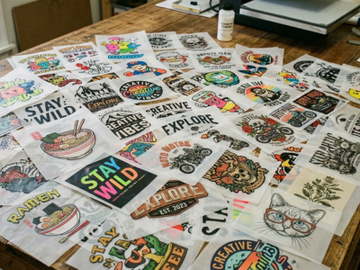
DTF transfer (Direct to Film) has established itself in recent years as one of the most interesting textile marking techniques for professionals.
Why such enthusiasm?
Because DTF meets very concrete needs: print complex visuals, work on varied textiles, manage small or medium runs, carry out reorders quickly and maintain true production flexibility.
Long reserved for the most curious or technical players, DTF has now become a reference solution for many:
- textile marking workshops,
- clothing brands,
- designers,
- sports clubs,
- event agencies,
- resellers,
- textile personalization professionals.
In this article, we explain what DTF transfer really is, how it works and especially why it appeals so much to textile professionals.
definition
What is DTF transfer?
DTF stands for Direct to Film.
Unlike direct-to-garment printing, the image is not printed directly onto the textile.
It is first printed onto a specific film, then transferred onto the garment using:
- suitable inks,
- a white underlay,
- a hot-melt adhesive powder,
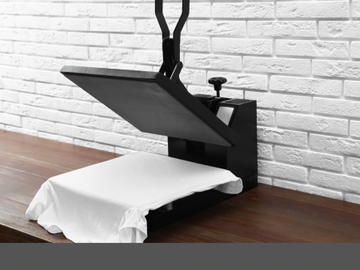
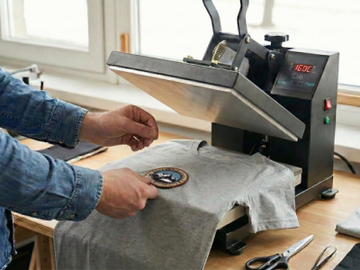
- and a heat press.
This process allows for marking that is:
- precise,
- versatile,
- compatible with many textiles,
- and particularly valuable for professional needs.

features
How does DTF transfer printing work?
The DTF process follows several steps.
1. Printing the design on DTF film
The design is printed on a DTF transfer film using suitable inks, typically in CMYK + white.
The white layer plays an essential role, particularly for:
- maintaining opacity,
- enhancing colors,
- printing on dark textiles.
2. Application of adhesive powder
A heat-fusible powder is applied to the still-wet ink.
It then allows the visual to adhere properly to the textile.
3. Gelification / transfer preparation
The film then goes through a heating phase, depending on the process used, to prepare the transfer before application.
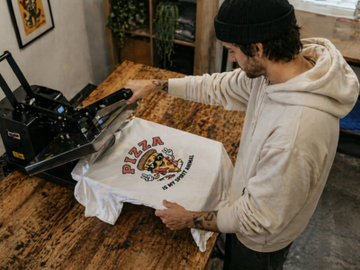
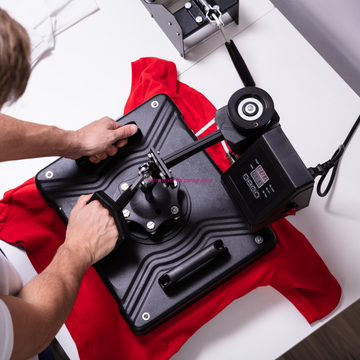
4. Application on Textile Using Heat Press
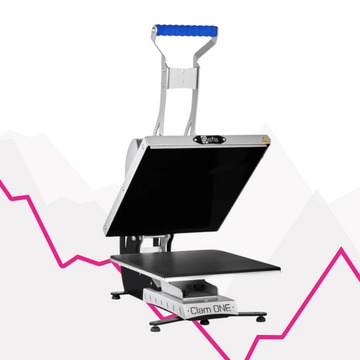
The transfer is finally applied to the garment or textile support using a heat press, according to precise parameters:
- temperature,
- pressure,
- pressing time,
- peel conditions.
👉 It is this combination that allows you to achieve clean, sharp and durable marking.

benefits
Why do textile professionals love DTF so much?
The success of DTF does not rest solely on the novelty effect. It has developed so much because it responds to real production constraints.
Great graphic freedom
DTF allows you to print visuals that are difficult to reproduce with certain other techniques:
- multicolor logos,
- fine lettering,
- precise details,
- gradients,
- complex visuals,
- small graphic elements.
It's a real asset for professionals who need to handle:
- demanding visual identities,
- corporate markings,
- creative collections,
- varied customer requests.
Very wide textile compatibility
One of the major strengths of DTF transfer is its versatility.
It can be used on many substrates, including:
- cotton,
- polyester,
- cotton/polyester blends,
- light textiles,
- dark textiles,
- sweatshirts,
- t-shirts,
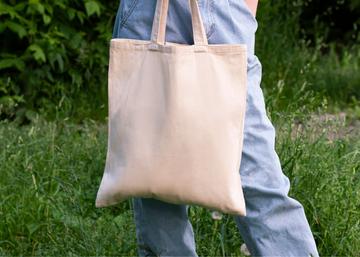
- tote bags,
- workwear,
- jerseys,
- textile accessories.
👉 This expanded compatibility is one of the major reasons why many workshops have adopted it.
An ideal solution for small and medium runs
DTF is particularly interesting for:
- micro-runs
- small series
- medium series
- product testing
- capsule collections
- reorders
- on-demand orders
For many professionals, it is an excellent compromise between:
- flexibility,
- quality,
- speed,
- ease of use.
True flexibility in production organization
DTF transfer allows you to separate the printing of the visual from the application on the textile.
This approach offers several advantages:
- order or produce sheets in advance,
- store transfers before application,
- press at the right time,
- better manage restocking,
- adapt production to urgent orders,
- gain agility in your workshop.
👉 For professionals, this flexibility is often a decisive argument.
Good durability over time
When it is:
- properly printed,
- properly stored,
- properly applied,
- applied to suitable textile,
- properly maintained,
DTF offers excellent wash durability and good resistance to wear.
This is one of the points regularly sought by professionals who want to offer marking that is both aesthetic and reliable.

economical
Is DTF a 'profitable' technique for professionals?
DTF is also appealing because it responds to an interesting economic logic.
Without oversimplifying the comparison, it often makes it possible to combine:
- beautiful visual quality,
- good flexibility on quantities,
- wide textile compatibility,
- more flexible management of series and reorders,
- and consistent production costs depending on usage.
👉 For professionals looking for a modern, versatile and practical everyday solution, it is a very serious option.
for whom?
For which professionals is DTF transfer particularly interesting?
DTF is particularly relevant for businesses that need responsiveness, flexibility and a good level of quality.
It is very well suited for:
- textile marking workshops
- clothing brands
- designers and emerging brands
- embroiderers and screen printers
- event agencies
- communication agencies
- clubs, associations and student unions
- e-commerce businesses
- promotional product professionals (for the textile section)
- resellers and personalization specialists
Transfer types
DTF, DTG, sublimation, screen printing: should these techniques be opposed?
Not necessarily.
Each marking technique has its uses, advantages, and constraints.
But what explains DTF's success is that it combines several qualities sought by professionals:
- great graphic freedom,
- good compatibility with different textiles,
- true flexibility on quantities,
- more agile production organization,
- a solution adapted to real-world needs.
This is precisely what makes it, today, a highly appreciated technique in many professional environments.
the leader
In summary: why has DTF transfer become the standard?
The DTF transfer has become established among textile professionals because it meets very concrete needs:
- print complex visuals,
- work on varied substrates,
- manage small and medium runs,
- produce quickly,
- remain flexible,
- ensure good print quality,
- provide reliable marking over time.
For many professionals, DTF is no longer just a novelty: it has become a serious, modern, and particularly effective production solution.
a trusted supplier
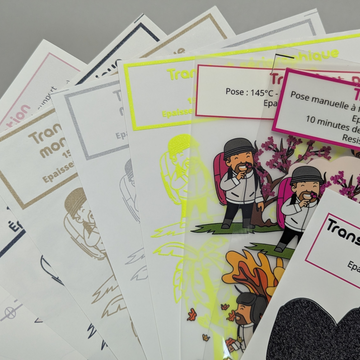
Looking for DTF transfers ready to press?
At Sherpa Transfert, we support textile professionals with solutions designed for real production:
- DTF transfers
- screen print transfers
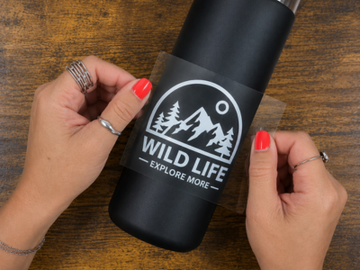
- UV DTF stickers (for object marking projects)
- and a service designed to meet quality, deadline and responsiveness requirements
👉 If you're looking for a reliable solution for your textile markings, discover our products or contact our team.
Our DTF transfers
Find all our DTF transfers:
- with logo
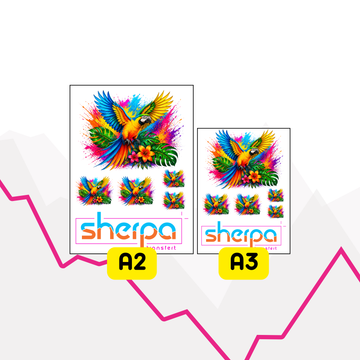
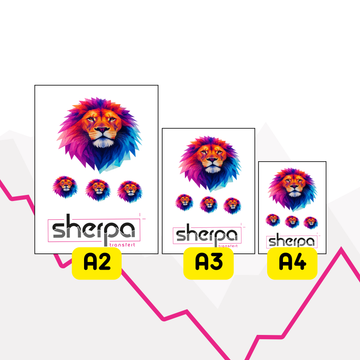
- on sheet
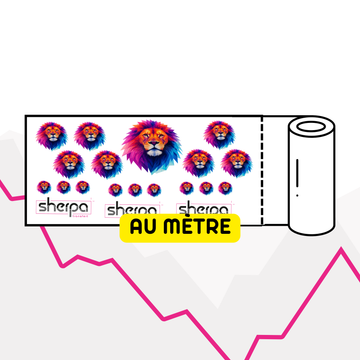
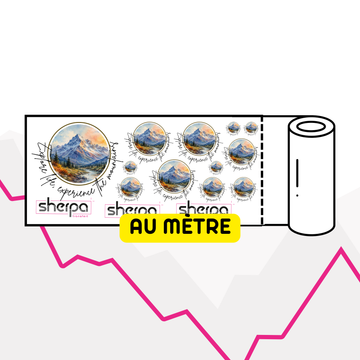
- by the meter
- special softshell
For every need: a solution!

DTF Transfer Printing

DTF Transfer Printing

DTF Transfer Printing

DTF Transfer Printing

DTF PRO MAX logo printing with Easy order
Useful resources
Quick links to access important information.
File guide
Tips for exporting your PDF/AI/PNG.
AI tools
Automatic vectorization and background removal are at your disposal.
Tutorials and articles
Expert guides, tutorials, compatibility information and blog to help you in any situation.
Design service
Our teams support you at every step.


