

















































Technological innovation has always been the driving force behind evolution in the printing world. Today, we are witnessing a revolution thanks to DTF (Direct To Film) printers. These machines, both sophisticated and accessible, are redefining the standards of textile printing, offering unmatched quality and unprecedented flexibility.
Whether you are a printing professional looking to modernize your workshop or a newcomer curious about the latest advances, this guide will immerse you in the heart of DTF technology. Discover how these printers work, the different models available on the market, and how to make the right choice based on your needs and budget.
How Does a DTF Printer Work?
DTF printing, or Direct To Film, is an innovative textile printing technique that stands out for its simplicity and effectiveness. But how do these printers manage to produce such impressive results? Let's dive into the mechanism of these machines.
The printing process:
The fundamental idea behind DTF printing is simple: instead of printing directly on the fabric, the image is first printed on a special film, which is then transferred onto the textile. This method allows for great precision, an extended color palette, and optimal adhesion on various types of fabrics.
1 - Film printing
Unlike traditional methods that use paper, the DTF printer uses a specific PET film. The image is printed with a white layer that is added on top of the colors to ensure optimal opacity and shine.
2 - Powder application
Once the image is printed on the film, a heat-fusible adhesive powder is applied. This powder plays a crucial role in binding the colored pigments of the print to the fabric fibers during transfer.
3 - Powder fusion
The film is then heated, which allows the powder to melt and bond with the ink. This process prepares the film for the final transfer onto the textile.
Special inks
DTF printers use pigmented inks specifically designed for this technique. These inks, available in cyan, magenta, yellow, black, and white, are essential for achieving vibrant and long-lasting prints. White ink, in particular, is crucial as it serves as the base on which the colored design is printed, ensuring accurate color reproduction on textiles.
The RIP Software
An often underestimated but essential element of the DTF printing process is RIP software. This specialized software manages colors, optimizes print quality, and ensures that CMYK and white inks are used efficiently. It plays a decisive role in color accuracy, detail sharpness, and overall print quality.
In summary, DTF printers combine advanced technologies, special inks, and sophisticated software to deliver a revolutionary textile printing solution. They enable unmatched flexibility, precision, and quality, making DTF printing a technique of choice for professionals and discerning enthusiasts.
DTF Printers sheet-fed
Sheet-to-sheet DTF printers are designed to print on individual sheets of film. They are generally more compact and are ideal for small productions or projects requiring reduced-size prints.
1- Common sizes
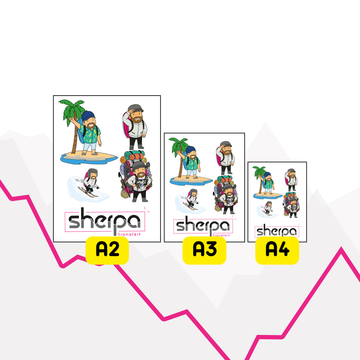
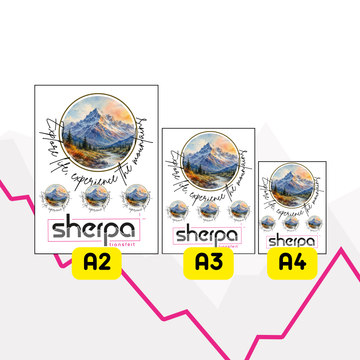
These printers are available in different print widths, including A4, A3 and A2. Each size is adapted to specific needs, whether for personal projects or small-scale professional orders.
2 - Popular brands
Brands like Epson, with models such as the Epson L1800 converted for DTF, are often cited among the favorites in the field of sheet-to-sheet DTF printers.
3 - Price
Sheet-to-sheet DTF printers can vary in price depending on the brand, features and size. In general, prices can start from 1,000 euros for entry-level models and can go up to 25,000 euros for high-end models with advanced features.
4 - Advantages
Compactness : These printers are generally smaller and lighter, making them ideal for limited spaces.
Flexibility : They are perfect for small productions or projects requiring reduced-size prints.
Initial cost : Sheet-to-sheet printers are often cheaper than their roll-fed counterparts, making them more accessible for small businesses or individuals.
5 - Disadvantages
Print Volume : These printers are not designed for large-scale production or batch printing.
Speed : Sheet-fed printers can be slower than roll-fed models, particularly for large orders.
Sheet Changes : The user must manually change the film sheets, which can be tedious for large quantities.
DTF Printers roll-fed
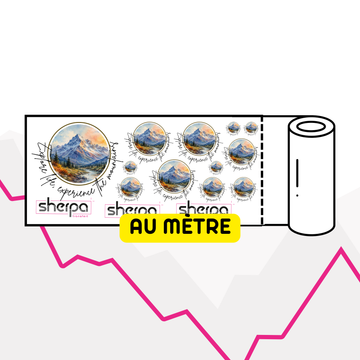
These printers are designed to print directly onto transfer film rolls. They are ideal for large-scale projects or series production, offering greater flexibility and capacity..
1- Common widths (print width)
These printers are available in several widths, typically 30cm, 60cm and 120cm. These machines are perfect for businesses that handle large quantities of transfers or have tight deadlines.
2 - Popular brands
Renowned brands such as Roland, Mimaki and Mutoh are often cited in the roll-fed DTF printer market. Each of these brands offers a range of models suited to different needs and budgets.
3 - Price
Roll-fed DTF printers tend to be more expensive than flatbed models due to their capacity and advanced technology. Prices can start from 10,000 euros for entry-level models and can reach up to 30,000 euros or more for high-end models.
4 - Advantages
Print volumes : Designed for large-scale production, these printers can handle large quantities of transfers at once.
Speeds : Roll-fed printers are generally faster, which is ideal for urgent orders or large productions.
Automation : Less manual intervention is required, as printing is done continuously on rolls.
5 - Disadvantages
Initial cost : The initial investment for a roll printer is generally higher than for a sheet printer.
Space : These printers require a larger work space due to their size and roll management.
Maintenance : Roll printers may require more regular or specialized maintenance due to their complexity.

Comparison table : DTF sheet printers vs DTF roll printers

Investment and DTF printer selection
Print Volume
If you plan to process large orders or regular series production, a roll-fed printer might be more suitable. For smaller or occasional projects, a sheet-fed printer could be sufficient.
Available Space
Roll-fed printers require more space than sheet-fed printers. Make sure you have enough space in your workshop or office to accommodate the chosen equipment.
Budget
Set a clear budget. Remember that, in addition to the initial cost of the printer, there will be operating costs, such as ink, films and maintenance.
Understanding Total Cost
When investing in a DTF printer, it is essential not to limit yourself to the initial cost of the machine. Operating costs, such as consumables (ink, films, hot melt powder) and possibly software licenses, add to the purchase price. Additionally, regular maintenance, while ensuring the longevity and performance of the printer, can also incur additional costs. Some suppliers offer maintenance contracts, while others charge for individual interventions. It is therefore crucial to take all these costs into account to have a complete picture of the investment.
Ovens : essential tools for DTF printing
Convection ovens are essential for the DTF printing process, as they allow you to dry and fix the adhesive powder on the printed film. You can find a range of convection ovens suited to different needs and budgets:
Tabletop convection ovens:
These compact models are ideal for small businesses or workshops with limited space. They offer adequate drying performance for small to medium-sized projects.
Industrial convection ovens: Designed for larger businesses and projects requiring high production capacity, these ovens offer better energy efficiency, precise temperature control, and faster drying capacity.
Convection oven prices typically range between 500 and 2,000 euros, depending on size, features, and brand. They are available from printing equipment suppliers and specialized online or physical stores.
It is also worth mentioning that some DTF printer models are equipped with an integrated convection oven, which allows for a continuous and faster printing and drying process. These all-in-one printers can be more expensive, but they offer time and efficiency gains for businesses needing a more integrated and compact solution.
Space planning to accommodate a DTF machine
Installing a DTF machine in your workshop requires careful planning and special attention to space layout. Here are some key elements to consider to ensure optimal operation of your DTF equipment:
Space requirements: DTF machines and associated equipment take up considerable space. Make sure you have sufficient workspace to accommodate the printer, supplies, accessories and related work areas. For example, for a 60cm width roll printer, plan for a minimum of 30m2.
Temperature and humidity control: DTF machines work best in environments where temperature and humidity are controlled. Maintain a constant ambient temperature (18 - 23 °C) and monitor humidity levels (30 - 60%) to avoid problems related to climate fluctuations, which could affect the quality of your prints and the durability of your equipment.
Ventilation and filtration: DTF machines generate fumes and potentially toxic emissions during printing and drying. It is crucial to install an effective ventilation system with adequate filtration to evacuate these fumes and ensure a healthy and safe working environment.
UV protection: DTF inks are sensitive to UV rays and can be affected by direct sun exposure. Avoid placing your DTF machine near windows or in areas where it could be exposed to sunlight.You can also install blinds, curtains or protective films to preserve the quality of your prints and extend the life of your equipment.
By taking these elements into account when setting up your workspace, you will ensure optimal operation of your DTF machine and preserve the quality of your prints.
In conclusion: do you really need to buy a DTF printer ?
The DTF printer can be a real solution for some workshops. If you have regular volume, suitable space, a trained team and the desire to integrate the entire production chain internally, the investment can be justified.
But in reality, many professionals quickly discover that the subject is not limited to buying the machine.
A DTF installation also includes:
- ink and consumables management,
- the oven or drying system,
- maintenance,
- adjustments,
- daily maintenance,
- control of the work environment,
- and time spent on printing rather than final production.
In other words: buying a DTF printer can be relevant… but it's not necessarily the simplest solution, nor the most profitable, especially if your priority is above all to produce quickly, cleanly and without burdening your workshop.
For many textile customization workshops, sign makers, brands, textile resellers, agencies or independents equipped with a heat press, the most effective solution is often simpler: order ready-to-apply DTF transfers.
At Sherpa Transfert, you benefit from more flexible operations:
- no heavy investment in a machine,
- no maintenance to manage,
- no constraints related to inks or curing,
- no printing station to set up,
- transfers ready to be applied,
- consistent quality,
- and real time savings in production.
You stay focused on what really matters: application, customization, finished textile and customer satisfaction.
👉 Are you hesitant between buying a DTF printer or outsourcing your printing?
Contact Sherpa Transfert : we can help you choose the simplest and most suitable solution for your business.


