









































DTF Softshell BLOCKMAX printing: the solution that limits pigment bleed-through
The BLOCKMAX DTF transfer was specially developed to address this issue and secure your textile transfers.
- ✔ Limits pigment bleeding
- ✔ No outlines
- ✔ From 1 piece
- ✔ Aging test available

1️⃣ From 1 piece
No minimum order.
💶 Competitive pricing
Pro technology at an optimized price.
🇫🇷 Made in France
Manufactured in our workshops near Grenoble.
⚡Guaranteed delivery times
In case of delay, you are refunded.
"Sublimation bleed" 👉 the wrong term
The term "sublimation bleed-through" is commonly used on softshells — but this terminology is technically incorrect.
💡Technical clarification
A softshell has never been sublimated. It is dyed industrially with disperse dyes at high temperature in a dye bath. These dyes are deeply embedded in the polyester fibers — not printed on the surface.
This is therefore not sublimation that "rises up". These are dyes that migrate under the effect of heat. This phenomenon is called dye migration — or pigment rising — and it affects all thermal marking processes, not just DTF.
👉 How does this phenomenon occur?
Heat from pressing reactivates the dyes dispersed in the fibers. They return to a gaseous state and seek to migrate towards the design.
The application temperature plays a direct role: generally 145°C for DTF or 160°C for screen print transfers (working at the lowest possible temperature already helps limit the intensity of the phenomenon).
➡️Result: the transfer is damaged, stains appear on the design.
⚠️Important
Special screen-printed transfers are also affected by dye migration. BLOCKMAX is not the only approach, but it is currently the most effective in DTF for this type of substrate.
What is BLOCKMAX Softshell DTF transfer?
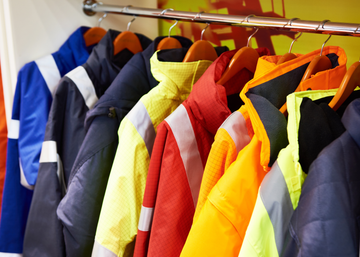
The BLOCKMAX Softshell DTF transfer is an advanced DTF printing solution specially designed for marking technical textiles. It is ideal for complex substrates such as softshell jackets, workwear and outdoor textiles.
Unlike a standard DTF transfer, BLOCKMAX integrates specific technology to secure your markings on heat-sensitive fabrics. It is based on a reinforced formulation that improves both adhesion and resistance to pigment migration.
This textile transfer allows you to maintain a clean, precise and durable finish, even under demanding use conditions. It is perfectly suited for professionals seeking a reliable textile transfer printing solution.
DTF transfer comparison: classic vs BLOCKMAX
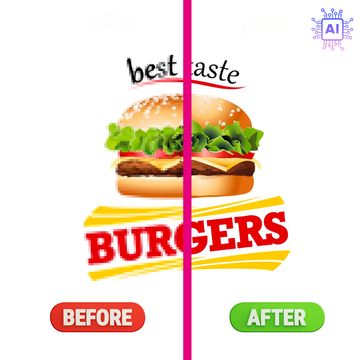
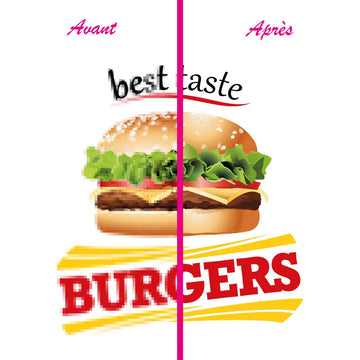
At the bottom, a standard DTF transfer. You can see pigment migration that alters colors and degrades the visual quality.
At the top, the DTF BLOCKMAX transfer. Colors remain sharp, whites are preserved. No visible migration, even on technical textiles.
The difference is immediate. With BLOCKMAX, your textile transfer print remains reliable, clean and durable.


How does BLOCKMAX DTF transfer block migration?
The BLOCKMAX DTF transfer integrates specific technology to counter this phenomenon.
Result
👉 Result: your visuals remain sharp, colors are not altered.
⚠️ Our tests revealed a blockage in 99% of cases.
We recommend testing with any series production.
And over time?
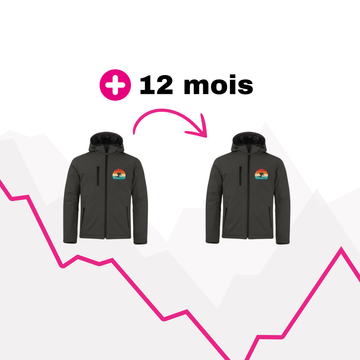
The phenomenon doesn't stop after pressing. Each wash, dryer cycle, or heat storage restarts the migration. Perfect application can degrade within a few weeks.
Aging test
Our simulation of accelerated aging (equivalent to 1 year) shows effective blocking in the vast majority of cases. We systematically recommend a test before any mass production — results vary depending on the textile supplier, color, and pressing conditions.

DTF BLOCKMAX in a nutshell
⚠️ No transfer — DTF or screen print — can claim to block 100% dye migration on all textiles. Softshell is an unstable substrate: the concentration of dispersed dyes varies by manufacturer, batch, and color. BLOCKMAX is the most effective solution available in DTF. Not a miracle solution.
🛡️ Barrier limiting pigment bleeding
A specific formulation creates an insulating layer between the textile and the design, greatly limiting the passage of dispersed dyes.
🌡️Thermal shield
Slows down dye reactivation during pressing, where a standard transfer lets it pass freely.
⏱️ Durable protection
The barrier holds over time, reducing delayed migration after washing and storage.
✨Whites Preserved
White areas — the most sensitive — retain their sharpness even on dark textiles.
🧵Softness preserved
No stiff feeling. The transfer remains comfortable, even on heavily used jackets.
⚠️ However, standard DTF transfer remains more flexible.
📐No outline
Clean and professional result. No glue halo around the design.
The best protection available
BLOCKMAX is the most reliable DTF reference for limiting dye migration on softshell and technical polyester.
Test. Validate. Produce — with confidence.
FAQ on BLOCKMAX Softshell DTF Transfer
What is BLOCKMAX Softshell DTF transfer?
BLOCKMAX Softshell DTF transfer is a textile transfer specially designed for softshells and textiles sensitive to pigment bleeding. It incorporates technology to limit color bleeding after pressing.
What is color migration / sublimation bleed?
Color migration is a common phenomenon on polyester and softshell textiles. Under the effect of heat, pigments present in the fabric can migrate into the textile transfer and change its colors. This can appear immediately… or several days after pressing.
Why classic DTF isn't always enough on softshell?
Softshells often contain dyes that are very unstable when heated. A standard DTF transfer can then absorb these pigments and see its colors degrade over time. DTF Softshell BLOCKMAX acts as a barrier to protect the print.
What textiles can be used with DTF Softshell BLOCKMAX?
This DTF transfer is recommended for softshell materials only.
Does DTF Softshell BLOCKMAX block 100% of bleed-through?
No technology can guarantee absolute blocking on all existing fabrics. However, BLOCKMAX significantly reduces the risk of softshell migration compared to a standard DTF transfer or screen printing transfer.
Why can puckering appear several weeks after application?
Textile pigments sometimes continue to react after pressing, particularly during storage, transport or washing. This is why some sublimation bleed-through may appear gradually over time.
Can you order without a minimum?
Yes. Like all our DTF transfers, the Softshell BLOCKMAX is available with no minimum order.
How do you know if a textile requires anti-migration transfer?
Softshells, polyester sportswear, sublimated textiles and dark technical fabrics are the most affected. If in doubt, a preliminary test is recommended.
We offer an aging test, simulating one year of aging.


